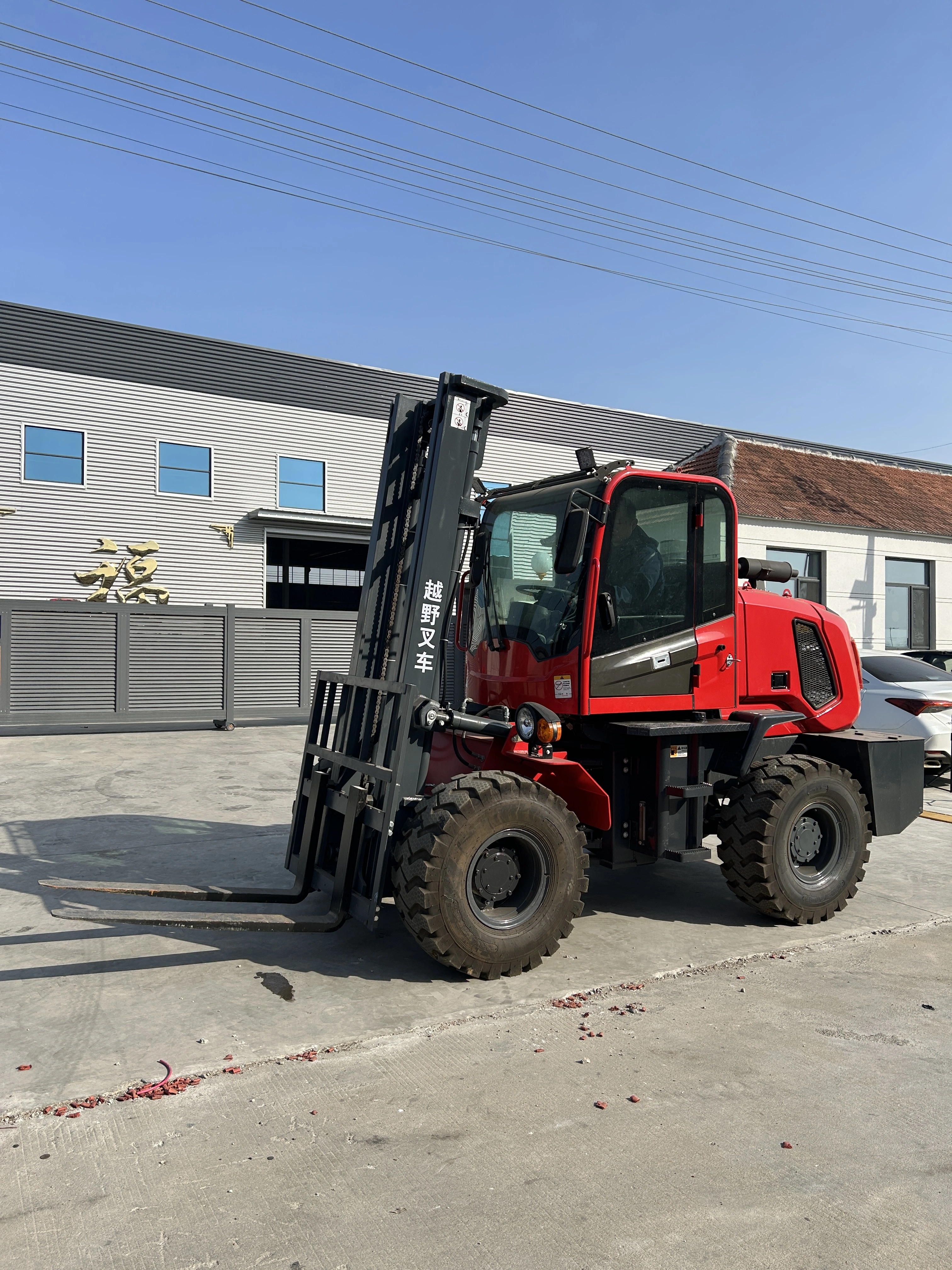
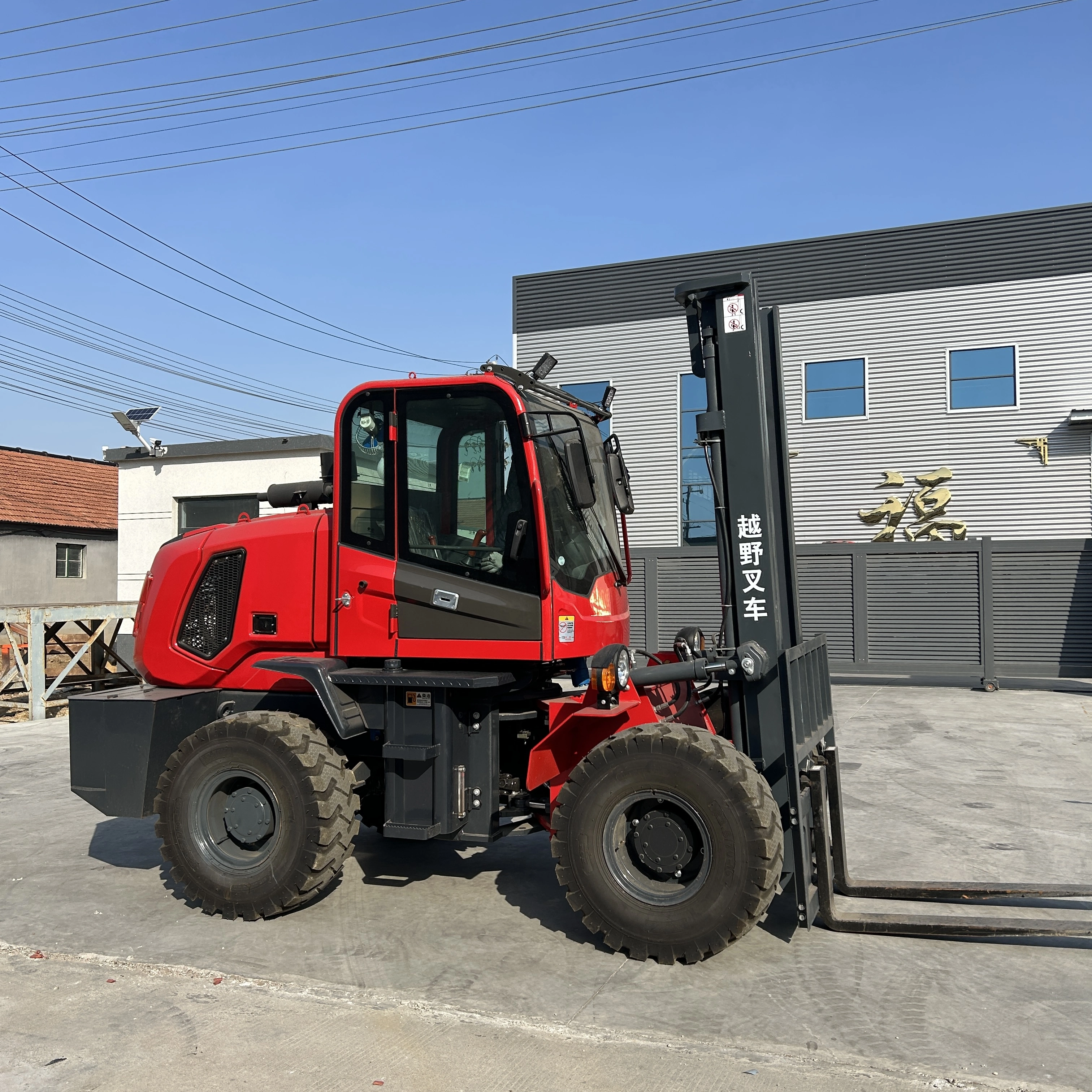
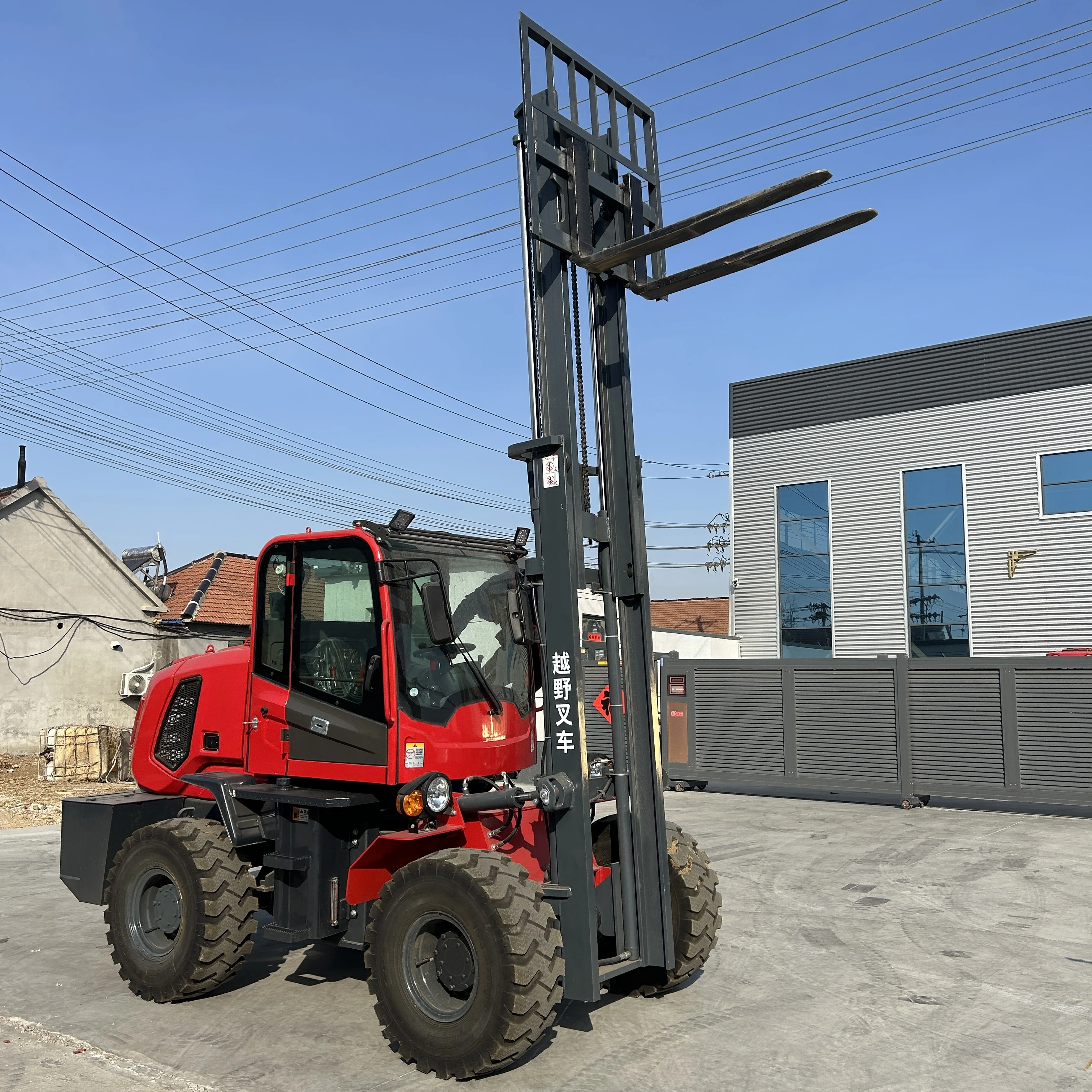
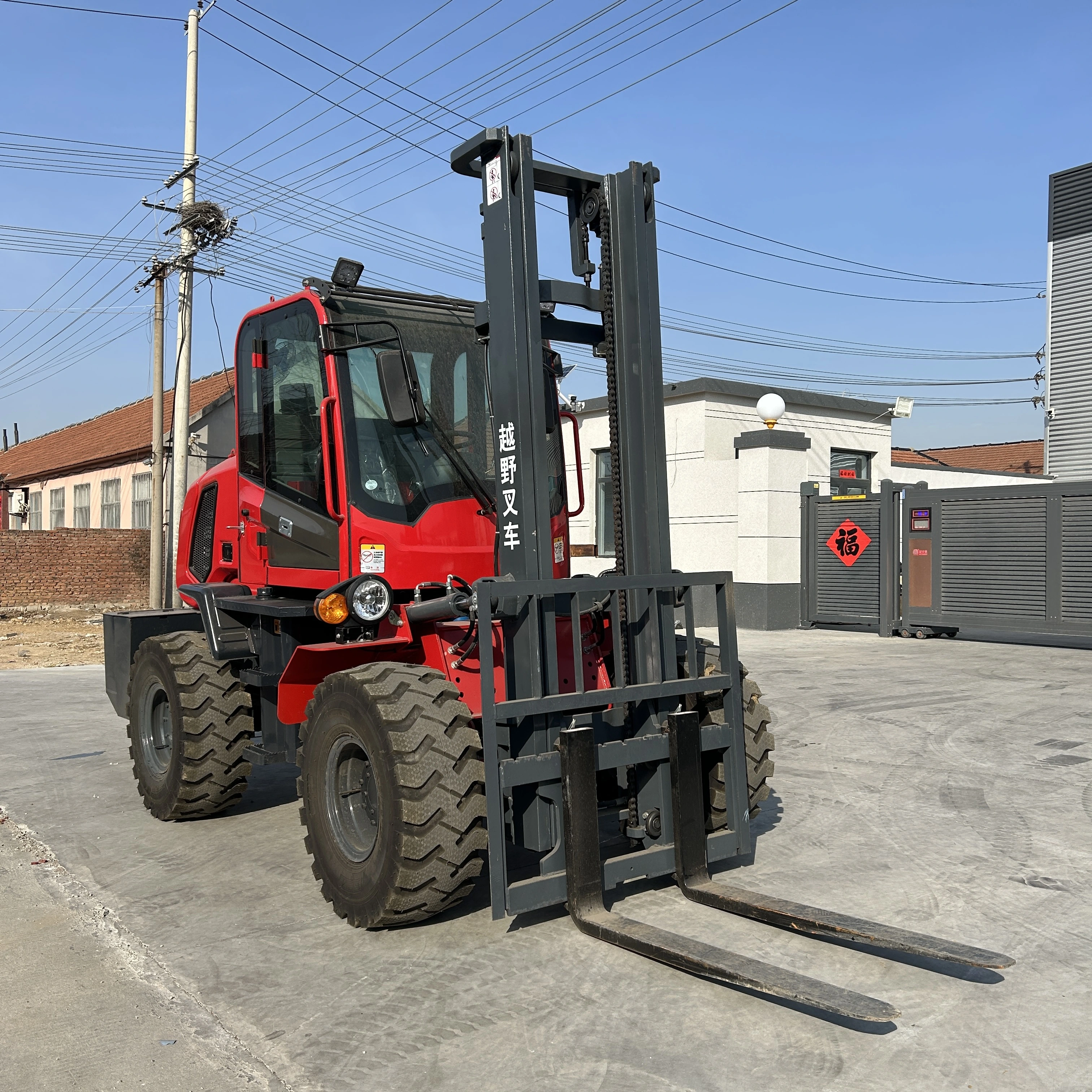
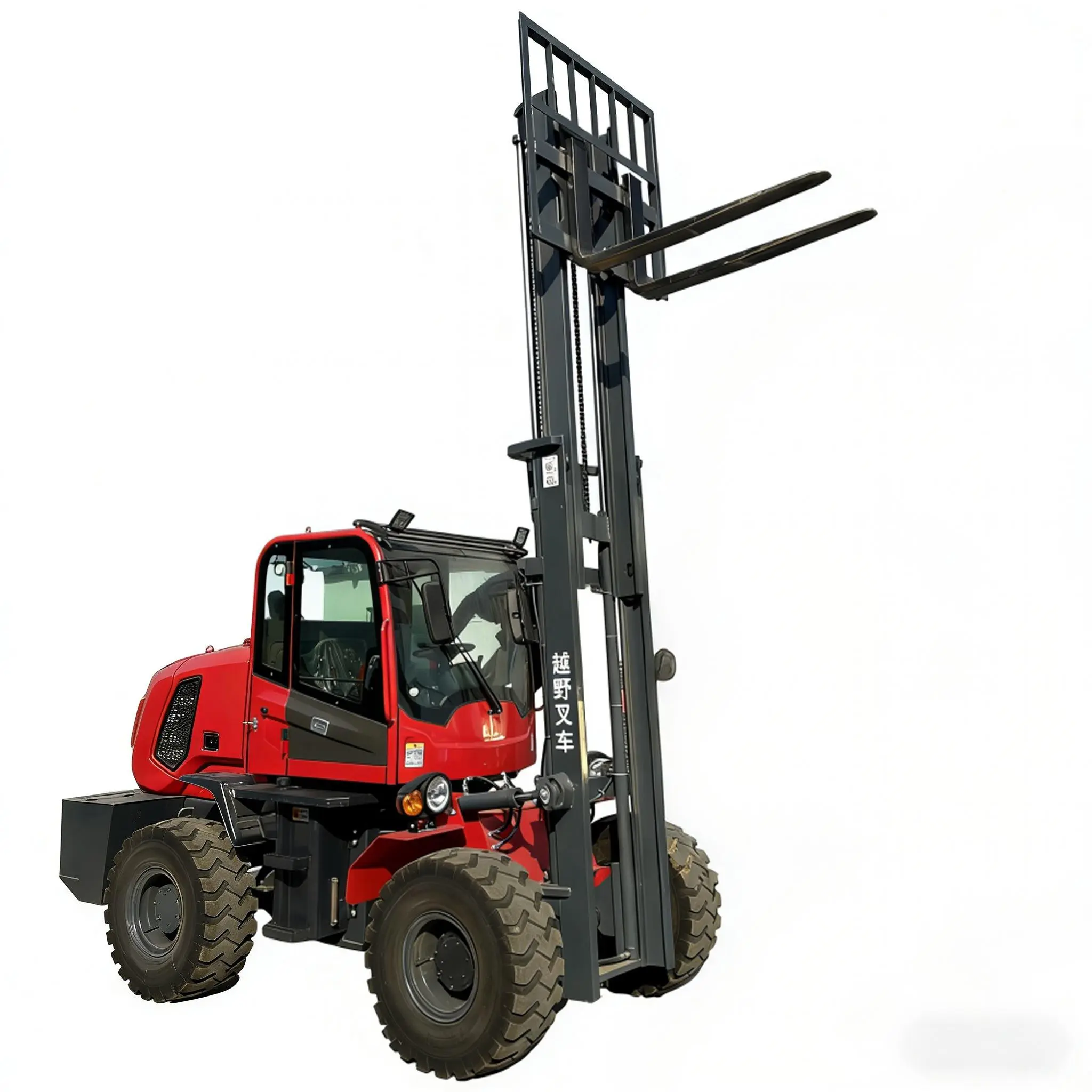
The page names five working environments for this model. Each one turns a different line of the parameter sheet into the number that decides your order.
discharge height 3,000–6,000 mm
Construction sites
Building materials, cement, steel pipes and bricks are usually lifted to truck beds and containers, so mast reach matters more than travel speed.
Decide: the discharge height and fork length your tallest regular lift needs, then check it against the 2,300 mm gantry height and your on-site overhead clearance.
16/70-20 tyres, 280 mm centre clearance
Mining operations
Mining supplies, ore materials and industrial equipment mean constant tyre and underbody contact with loose, abrasive ground.
Decide: whether your haul roads suit 16/70-20 tyres, and price tyre and undercarriage replacement as a running cost before comparing purchase prices.
4x4 drive, ≥30° climbing
Agricultural farms
Fertilizer, feed bags, timber, crops and farm equipment on muddy farmland are the traction problem the four-wheel-drive system and 45 km/h travel speed address.
Decide: how wet your yard gets in the worst month of the year, and whether your routine slopes sit inside the stated climbing capacity.
fork length 1,220–1,820 mm
Timber & forestry
Logs, wood pallets and forestry materials need long forks and stable load support rather than high lift.
Decide: the longest fork your log handling requires, and check the 4,600 kg vehicle mass against the ground you travel and any trailer you load it onto.
minimum turning radius 4,000 mm
Outdoor logistics & warehouses
Outdoor loading areas and yards that standard forklifts cannot handle are the stated target use of this model.
Decide: measure your tightest aisle or gate first — the 4,000 mm turning radius and 4,300 × 2,000 × 2,800 mm footprint define the space you need.
rated lifting load 4,000 kg
Mixed-duty fleets
Rental and plant-hire fleets rarely know the next job, so the useful anchor is the rated load rather than any single application.
Decide: the heaviest pallet weight you will accept on hire, then confirm the load chart at your chosen fork length and load centre in writing.